
War, Oil, and Markets: What the Iran Conflict Could Mean for Investors
By Paul T. Murray, AIF®, ChFC®
The U.S. decision to join Israel in attacking Iran has introduced a new layer of uncertainty into financial markets that were already navigating a complex landscape. While conflict of any kind can trigger short-term volatility, history suggests that wars, on their own, are generally not the enemy of investment portfolios that many people assume.
What History Tells Us
Looking back at the Gulf War in 1990-1991, when the U.S. attacked Iraq, the S&P 500 sold off by 17% over a period of 10 weeks — and then fully recovered within 6 months. Fast-forward to the Iraq conflict beginning in 2003, and the S&P 500 actually rose by 26.7% in the first 12 months following the invasion's start.
The Afghanistan incursion in 2001-2002 presents more mixed data, given that it coincided with the bursting of the dot-com bubble. The market declined by 24.8% in the first year, but the primary driver of those declines was not the war — it was the valuation bubble in internet and technology stocks.
Going further back, the Vietnam and Korean wars both saw the S&P 500 post strong overall returns, even with periods of poor performance along the way. The bottom line: war, in and of itself, has not historically been a reliable cause of significant or lasting market declines.
But this time may be different — and the reason comes down to one geographic chokepoint.
The Shipping Lane That Feeds The World Economy
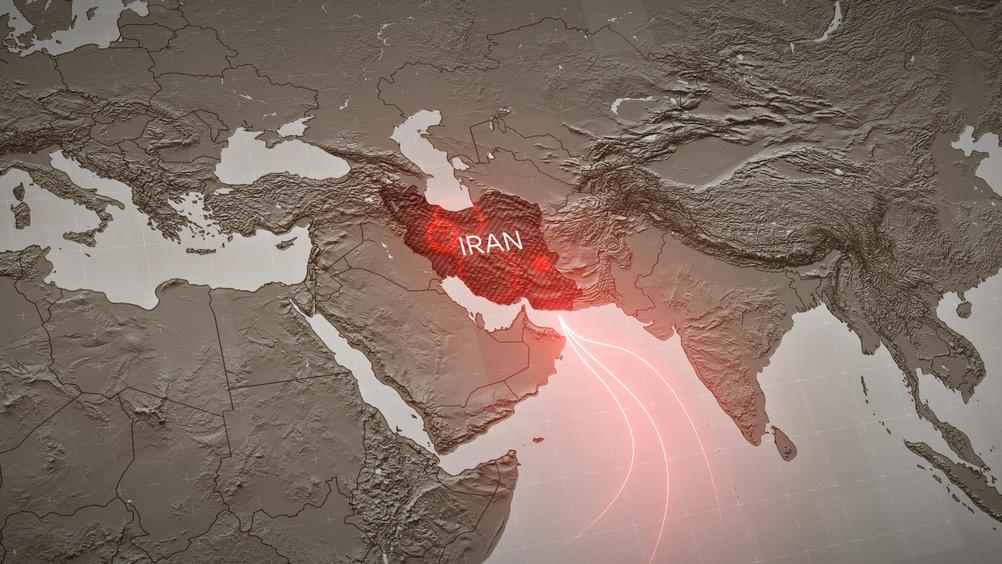
The Strait of Hormuz has served as a kind of protective shield for Iran for many years. The threat of closing this critical trade artery was enough to give pause to governments that might otherwise have viewed Iran as a threat worth confronting militarily. Disrupting that passageway would send shockwaves through the global supply chain, and everyone knew it.
Which brings us to oil. Many observers have been surprised by how relatively calm oil markets have remained under the circumstances. The explanation appears to be a robust global supply coming from multiple regions outside the Middle East, which is acting as a meaningful counterbalance to the disruption Iran could cause. For now, the market seems to be pricing in a manageable scenario.
The big "what if" that may not yet be fully priced in is the possibility that Iran will mine the Strait. If that proves to be the case, it could stifle trade for months. A sustained reduction in oil supply and transport from the region would likely keep energy prices elevated for an extended period — and the ripple effects would be felt across the entire economy, from travel and manufacturing, to the everyday consumer goods that are downstream from higher energy costs.
The Economic Backdrop Matters
That matters a great deal right now, because the U.S. economy is entering this conflict from a somewhat weakened position. Manufacturing struggled throughout 2025, and hiring has been running well below trend. If consumers are forced to absorb higher gas prices at the pump for an extended stretch, it could prompt them to pull back on spending in other areas. Perhaps even more concerning, a prolonged period of elevated oil prices could reignite inflation — a problem we've only recently managed to get under control.
Stepping back and looking at this market from 30,000 feet, equities were already in overvalued territory coming into 2026, with big tech showing signs of strain. Ongoing uncertainty around tariffs and AI disruption has created meaningful headwinds for a broader-based market advance. Add to that the fact that after three consecutive years of double-digit S&P 500 returns, some form of a mean reversion was already a reasonable expectation.
The Iran conflict may prove to be the catalyst that tips the market into a correction, which is defined as a 10% decline. Whether it deepens into something recessionary, accompanied by more significant declines, may ultimately depend on how long this conflict lasts.
The bottom line is this: the historical record offers some reassurance, but the variables surrounding this conflict are more consequential than most. A short, contained conflict may produce little more than a brief bout of volatility. A prolonged one, particularly if it disrupts oil transport through the Strait, carries the potential to pressure both growth and inflation simultaneously — a combination that financial markets handle poorly.
As in any armed conflict, the outcome is uncertain. What is certain is that staying anchored to a long-term plan, and resisting the impulse to react to headlines, has historically proven to be the most reliable strategy available to investors.