
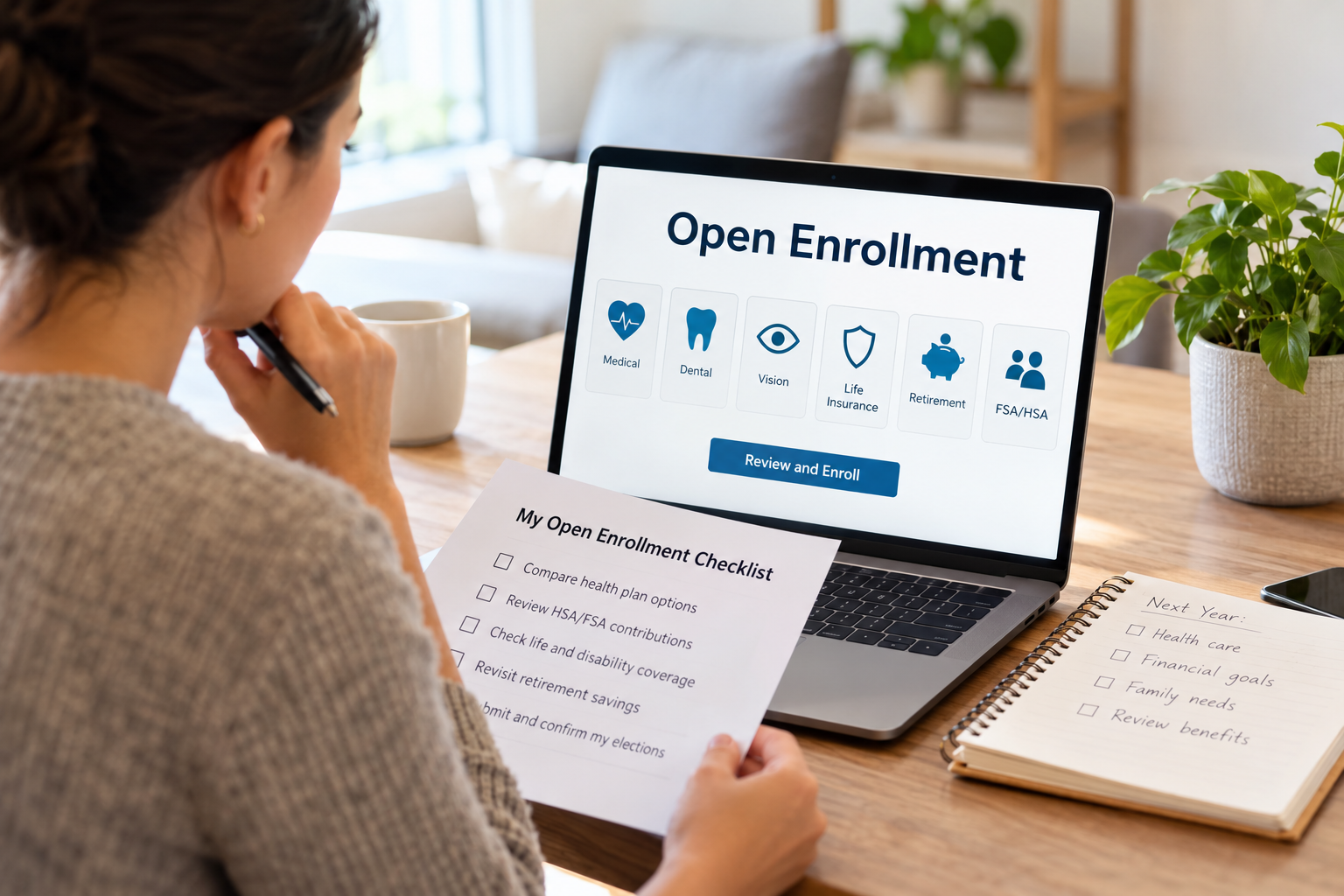
Open Enrollment: 5 Things to Do Before Choosing Next Year’s Benefits
It’s tempting to treat open enrollment as an annual click-through exercise: keep the same coverage, check a few boxes, and get back to your day. But “same as last year” is a decision—and not necessarily the right one.
Before choosing your benefits, consider what has changed in your household, your anticipated healthcare needs, and your financial priorities. The goal is to select benefits that protect your family, fit your budget, and support your longer-term plans.
1. Compare Total Healthcare Costs—not Just Premiums
The amount deducted from your paycheck is only part of the picture. Compare annual premiums alongside deductibles, copayments, coinsurance, and out-of-pocket limits. A lower premium does not necessarily mean lower total costs.
Think about the care you expect to need, including prescriptions, specialist visits, or a planned procedure. Verify that your doctors, preferred hospitals, and medications are covered under the specific plan you’re considering. When both spouses have workplace coverage available, compare the cost of covering everyone under one plan versus separate coverage, including any spousal surcharges.
Review both an ordinary year and one with substantial medical expenses. Then ask a practical question: Could we comfortably cover this plan’s deductible early in the year?
2. Be Intentional About HSA and FSA Contributions
Don’t choose contributions to a health savings account or flexible spending account simply by repeating last year’s amount. Estimate next year’s eligible expenses and consider what you can comfortably set aside from each paycheck.
These accounts have different eligibility and spending rules, so confirm which options work with your health coverage—including coverage through your spouse. For an HSA, account for employer funding when determining your own contribution. For a healthcare FSA, review your plan’s spending deadlines and any carryover or grace-period provisions before committing more than you expect to use.
Considering a dependent-care FSA? Estimate eligible childcare or other qualifying care expenses and coordinate contributions with your spouse. Before finishing enrollment, check this year’s remaining FSA balances and reimbursement deadlines, too.
3. Make Sure Life and Disability Coverage Fits Your Needs
Having insurance is not the same as having enough insurance, and disability insurance is not something you want to skimp on. Compare your workplace life insurance and existing policies with what your household would need to replace income, manage debt, and fund important goals after your death. The idea is this can pay real meaningful income to you when you can't go to work.
For disability coverage, look beyond the advertised percentage of salary. Check the monthly benefit cap, how long you must wait before payments begin, and how long benefits can continue. Ask whether payments would be taxable and compare the estimated amount available with your essential monthly bills.
Also find out what happens to your life and disability coverage when you change jobs or retire. Identify the gaps before deciding whether to purchase additional protection.
4. Revisit Retirement Savings and Beneficiaries
Use your benefits review as a reminder to check your retirement contributions. Are you contributing enough to receive the full available employer match? Has a raise, reduced debt, or lower household spending created room to save more?
Review whether pretax contributions, Roth contributions, or a combination fit your broader tax plan. Some investors favor Roth contributions because today’s rates are low relative to some historical periods and future rates could change. Whether Roth makes sense depends on your current and expected future tax bracket, state taxes, and other factors. The right choice deserves more consideration than simply keeping the existing setting.
While reviewing your accounts, verify primary and backup beneficiaries on retirement accounts, life insurance, and your HSA, where applicable. Check these separately from the dependents listed on your health insurance. Finally, calculate your expected take-home pay after all benefit and retirement elections.
5. Submit Your Elections—and Confirm They Took Effect
Confirm the enrollment deadline, when coverage begins, and which elections require action rather than renewing automatically. Check for any required questionnaires or approvals, particularly when adding life or disability insurance.
Submit before the deadline and save your confirmation. Review the selected plans, covered family members, contribution amounts, and any pending requirements. Don’t assume that saving your selections is the same as completing enrollment.
Set a reminder to check your first applicable paycheck and verify coverage when the new plan year begins. Catching an error promptly is better than discovering it when you need to use a benefit.
Make Your Benefits Part of Your Financial Plan
The best benefits package is not necessarily the cheapest or the most extensive. It is the one that fits your household’s needs without creating unnecessary costs or leaving important risks unaddressed.
PTM Wealth Management, LLC is a registered investment adviser; registration does not imply a certain level of skill or training. This material is general and educational, not individualized investment, tax, legal, insurance, or benefits advice. Statements about future tax rates or law are opinions, not guarantees, and may prove incorrect. Roth and pretax outcomes depend on individual circumstances. Insurance coverage, eligibility, limits, and deadlines vary by plan and law. Information is current as of publication and may change. Consult a qualified professional before acting. Full disclosures: www.ptmwealth.com