
Inflation Heats Up in September: What It May Mean for You
Prices rose faster in September than many economists expected. The Consumer Price Index (CPI), the government's main measure of what Americans pay for everyday goods and services, showed inflation climbing to 3.7% over the past year, up from 3.4% in August.
Below, we break down what the report showed, why prices jumped, and what it may mean for your budget, interest rates, the broader economy, and your retirement plan.
What the October 14th Report Showed
The Bureau of Labor Statistics (BLS) released its September CPI report on October 14, 2026. The key figures:
- Overall inflation: 3.7% over the past 12 months, up from 3.4% in both July and August. Economists had expected 3.6%.
- Monthly change: Prices rose 0.6% in September alone, the largest one-month increase in five months.
- Core inflation (which excludes food and energy because those prices swing widely): 2.6% over the past year, up from 2.4%, and above the 2.5% economists expected.
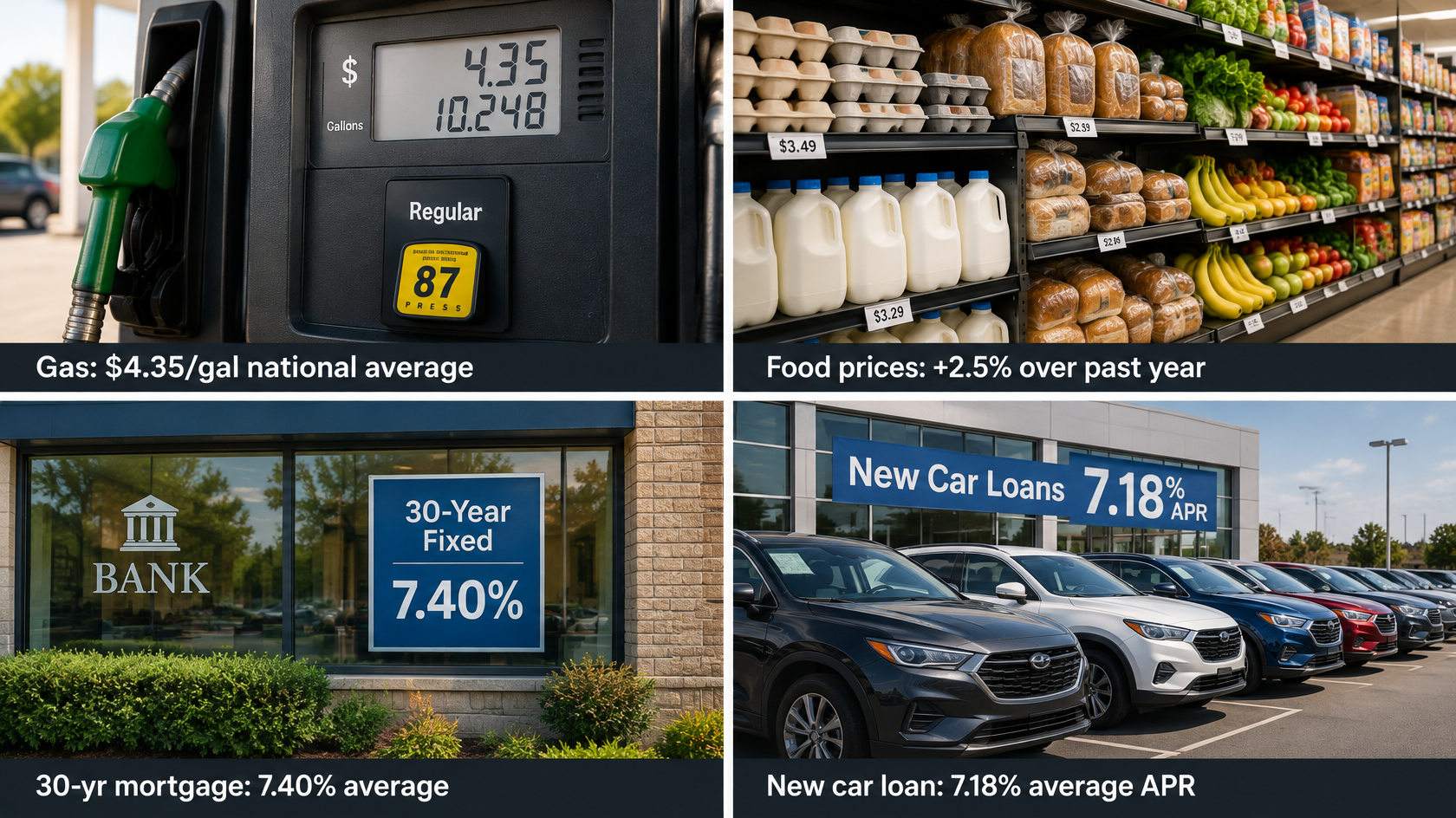
Gasoline was the main driver. Gas prices jumped 9.1% in September and accounted for more than half of the month's overall increase. Over the past year, gasoline is up roughly 34%, as oil climbed from about $80 a barrel in August to more than $106.
The core number deserves attention. It rose 0.3% for the month when forecasters expected 0.2%, which may suggest higher costs are starting to spread beyond the gas pump. Shelter costs rose 3.2% over the year, up from 3.0%. Food was a bright spot, with inflation easing to 2.5% from 2.7%.
What It May Mean for Your Everyday Budget
Most families feel inflation first at the gas station, and that is where September hit hardest. Higher fuel costs can also ripple outward. Diesel powers the trucks, farms, and shipping that move groceries and goods, so businesses may pass some of those costs along over time.
Paychecks are having a hard time keeping up. Wages were growing about 3% a year as of September, and pay has not outpaced inflation since March. That means many households may be losing a little buying power each month, even if their income is rising.
Consumers are noticing. A recent Federal Reserve Bank of New York survey found Americans now expect inflation of 3.9% over the next year, the highest reading since May 2023.
What It May Mean for Interest Rates
The Federal Reserve (the Fed) is already leaning against inflation. In September, it raised its benchmark interest rate by a quarter of a percentage point to a range of 3.75% to 4.00%. That was its first increase since July 2023, and Fed officials signaled that another hike this year is possible.
The Fed meets next on October 27–28. Before today's report, futures markets priced in roughly a 22% chance of another increase at that meeting. A hotter-than-expected core reading could raise those odds, though the Fed may also weigh signs that job growth is cooling.
For everyday finances, that may mean:
- Borrowers: Mortgage, auto loan, and credit card rates may stay elevated or move higher. Mortgage rates have already risen for eight straight weeks.
- Savers: Higher rates can mean better yields on savings accounts, certificates of deposit (CDs), and money market funds.
- Bond holders: U.S. Treasury yields are hovering near their highest levels in more than two decades. When rates rise, prices of existing bonds generally fall, which can affect the value of bond holdings in the short term.
What It May Mean for Economic Growth
The Fed is walking a tightrope. Raising rates can help cool inflation by making borrowing more expensive, which slows spending. But slowing spending too much can also slow hiring and overall growth.
Consumer spending drives roughly two-thirds of the U.S. economy. When more of each paycheck goes to gas and essentials, households often cut back elsewhere, from dining out to travel to big-ticket purchases. Combined with higher borrowing costs, that may weigh on growth in the months ahead.
There is also a hopeful case. Core inflation, at 2.6%, remains well below the headline figure. If energy prices settle, overall inflation could ease without the Fed needing to push much harder. No one can predict which path the economy will take, which is why a plan built for more than one outcome matters.
What It May Mean for Retirees and Pre-Retirees
September's report was the final piece of data used to set next year's Social Security cost-of-living adjustment (COLA). The Social Security Administration (SSA) revealed that the 2027 COLA will be 3.6%, compared with 2.8% for 2026. Keep in mind that Medicare Part B premiums, usually announced in November, may absorb part of any increase.
A larger COLA can also carry a hidden tax cost. The income thresholds that determine how much of your Social Security is taxable have not been adjusted for inflation since they were set decades ago. As benefits rise, more retirees may find a larger share of their benefits subject to income tax.
Inflation also chips away at fixed income over time. At 3.7% inflation, the buying power of a fixed dollar amount would be cut roughly in half in about 19 years, well within a typical retirement. That is why we believe retirement income plans should account for rising costs, not just today's prices.
What You Can Do Now
One month of data is not a reason to overhaul a long-term plan. It can be a good prompt to check that your plan still fits the environment. If you would like to talk through how today's numbers may affect your situation, we are here to help. Reach out to the PTM Wealth Management team to schedule a conversation.
Important Disclosures
This article is provided for informational and educational purposes only and should not be construed as personalized investment, tax, or legal advice. Information is based on sources believed to be reliable as of October 14, 2026, but its accuracy and completeness cannot be guaranteed and it is subject to change. Economic forecasts and projections are not guarantees of future results. All investing involves risk, including the possible loss of principal. No strategy can assure a profit or protect against loss. Please consult a qualified professional about your specific situation. PTM Wealth Management is a registered investment adviser. Registration does not imply a certain level of skill or training.
Sources
- U.S. Bureau of Labor Statistics, Consumer Price Index
- Trading Economics, United States Inflation Rate
- CNN, Inflation was hotter than expected in September
- NBC News, Inflation jumped in September as gas and diesel prices squeezed consumers
- Benzinga, Inflation comes in hotter than expected at 3.7%
- CNBC, Fed approves interest rate hike, September 2026
- NewsNation, 2027 Social Security COLA estimates
- Social Security Administration, COLA information
Image Disclosure: Sources: AAA (10/13/26), BLS (9/26 CPI), Freddie Mac (10/8/26), Bankrate (10/13/26). Images are illustrative.